GoHighLevel Health Check: 25 Warning Signs Your CRM Is Slowing Down Your Business
CRM Optimisation, GoHighLevel Health Check, Business Automation
Your CRM should be a growth engine, not a bottleneck. This GoHighLevel Health Check guide helps you spot hidden issues, fix performance leaks and turn your CRM into a reliable revenue system with support from HL Growth Partner.
Introduction: When Your CRM Starts Working Against You
A modern CRM like GoHighLevel is designed to accelerate growth. It should capture leads, automate follow-up, keep your pipeline organised and give you clear visibility on revenue. Yet for many growing SMEs, agencies, SaaS and service-based businesses, the reality is very different: the CRM feels slow, messy and hard to trust, and teams quietly revert to spreadsheets and manual workarounds.
As GoHighLevel has expanded rapidly with AI, advanced workflows and new communication channels, the platform itself has remained broadly stable. Official status reports show full operation as of July 2026. But user communities still report slow navigation, freezing screens and multi-minute page loads when accounts are poorly structured or overloaded. In most cases, the problem is not GoHighLevel itself – it is how the CRM has been implemented, grown and maintained over time.
📌 Key Takeaway: A GoHighLevel Health Check is not about blaming the platform. It is about uncovering design, data and workflow issues that quietly slow your business every day.
Most business owners only realise they need a CRM Health Check when the symptoms are obvious – missed leads, angry customers, confused teams, unreliable reports. By then, you are already losing revenue. A structured GoHighLevel Health Check helps you find and fix issues early, so your CRM can keep pace with your growth instead of holding it back.
Why Every Growing Business Needs a CRM Health Check
Your GoHighLevel account today probably looks nothing like it did when you first set it up. You have added new funnels, offers, products, team members, automations and AI agents. You have layered in email, SMS, calls, communities, courses and maybe a SaaS mode. Each new initiative adds complexity – and without an intentional CRM Health Check, that complexity compounds into friction and risk.
Business growth: More leads, more contacts and more data fields increase load times and make poor structures painfully obvious.
Changing customer journeys: What worked for a simple funnel breaks when you add multiple products, upsells, memberships or regions.
New automations and AI: Each new workflow, Conversation AI or Voice AI agent can clash with existing logic if not architected properly.
Industry research on CRM optimisation highlights the same pattern: systems that are never reviewed become cluttered, inaccurate and underused. AI, omnichannel communication and advanced reporting only deliver value when the underlying data, workflows and user experience are healthy. A periodic CRM Health Check is now a core part of modern operations, just like financial audits or security reviews.
💡 Pro Tip: Treat your GoHighLevel Audit as a strategic review, not a technical clean-up. Start with business goals, then align your CRM architecture and automations to support them.
The 25 Warning Signs Your CRM Is Slowing Down Your Business
Lead Management Problems (1–5)
These issues show up at the very top of your funnel – often long before you notice pipeline gaps in your reports.
1. Leads are landing in the CRM, but no one knows who owns them.
Symptom: New contacts appear in GoHighLevel, but they sit in “New” or “Unassigned” for days.
Why it happens: Missing or outdated lead assignment rules, no round-robin, or manual assignment that no one consistently follows.
Business impact: Slower response times, cold leads, lost deals and poor first impressions.
Fix: Implement clear assignment rules in workflows, use round-robin for sales teams and create a “no-owner” smart list reviewed daily in your CRM Health Check.2. You have duplicate contacts everywhere.
Symptom: The same person appears multiple times with different tags, pipelines or email addresses.
Why it happens: Multiple forms, imports and integrations without standardised matching rules or data hygiene.
Business impact: Fragmented history, inconsistent messaging, inaccurate reporting and compliance risk.
Fix: Run a GoHighLevel Audit to define your “single source of truth”, standardise unique identifiers (usually email + phone) and schedule regular deduplication passes.3. Your team still asks prospects basic questions you already captured on forms.
Symptom: Sales calls start with “So, what are you looking for?” even though discovery forms exist.
Why it happens: Form fields are not mapped to useful custom fields or pipeline views; reps cannot see context at a glance.
Business impact: Wasted call time, poor customer experience and lower close rates.
Fix: Align form fields with CRM custom fields, redesign opportunity cards to surface key data and include this in your Workflow Optimisation plan.4. Lead sources are unclear or unreliable.
Symptom: Reports show “Unknown” or “Other” as your biggest lead source.
Why it happens: Inconsistent tracking parameters, missing UTMs, or funnels not mapped to proper source fields.
Business impact: You cannot confidently scale ad spend or know which campaigns are truly profitable.
Fix: Standardise lead source fields, enforce UTM conventions and use GoHighLevel’s attribution tools as part of your ongoing CRM Performance review.5. Response times are inconsistent or unknown.
Symptom: Sometimes leads get a reply in minutes, sometimes in days – and you cannot see the pattern.
Why it happens: No central SLA tracking, manual follow-up and no automation to cover gaps.
Business impact: Lost deals to faster competitors and unpredictable revenue.
Fix: Use workflows to trigger immediate confirmation messages, track “time to first response” and include SLA metrics in your Business Automation Audit.
Automation Problems (6–10)
6. You have “mystery automations” no one wants to touch.
Symptom: Workflows with vague names like “New Funnel V3 – OLD?” that everyone is scared to edit.
Why it happens: Rapid experimentation without documentation or naming standards.
Business impact: Conflicting automations, unexpected messages and wasted hours troubleshooting.
Fix: Run a GoHighLevel Optimisation project to audit every workflow, retire unused versions and implement clear naming and ownership conventions.7. Contacts get duplicate emails or texts.
Symptom: Customers complain about receiving the same message multiple times from different automations.
Why it happens: Overlapping triggers, tags and segments across campaigns and workflows.
Business impact: Annoyed prospects, higher unsubscribe rates and lower deliverability.
Fix: Centralise your CRM Automation strategy, define one “source of truth” workflow per journey and use exclusion conditions to prevent overlap.8. Workflows are timing out or taking too long to complete.
Symptom: Long delays between steps, especially in complex nurture sequences or multi-branch automations.
Why it happens: Overloaded workflows with too many actions, unnecessary waits or inefficient logic.
Business impact: Slow follow-up, inconsistent experiences and heavier load on the platform.
Fix: Break mega-workflows into modular journeys, use GoHighLevel’s improved workflow performance features and regularly test execution times as part of your Workflow Optimisation.9. No one can explain your automation strategy in one page.
Symptom: Different team members have different mental models of how leads are nurtured and booked.
Why it happens: Automations built reactively over time without a documented architecture.
Business impact: Onboarding new staff is slow, changes are risky and results are hard to predict.
Fix: Create a visual automation map during your GoHighLevel Health Check, showing each key journey from lead to sale to retention.10. You are not using new GoHighLevel automation features.
Symptom: Your workflows still rely on manual tags and basic triggers, ignoring new AI, goal actions and advanced conditions.
Why it happens: Lack of time to keep up with GoHighLevel updates across 2025–2026.
Business impact: Higher manual workload, slower optimisation cycles and missed opportunities for smarter routing and follow-up.
Fix: Include a quarterly GoHighLevel Audit to review new automation features, such as user reply-based goals and advanced triggers, and fold them into your core journeys.
Sales & Pipeline Issues (11–15)
11. Your sales team is managing deals outside GoHighLevel.
Symptom: Reps keep private spreadsheets or Trello boards instead of using the CRM pipeline.
Why it happens: Pipelines are cluttered, poorly named or do not match real-world sales stages.
Business impact: Zero visibility for leadership, unreliable forecasts and duplicated effort.
Fix: Redesign pipelines with the team, simplify stages and use the mobile Kanban view to make GoHighLevel the easiest place to work from.12. You cannot trust your pipeline value.
Symptom: Deals sit in the same stage for months, with no clear close dates or values.
Why it happens: No rules for updating opportunities, and no automation to clean up stale deals.
Business impact: Inaccurate revenue forecasts and poor strategic decisions.
Fix: Implement Sales Pipeline Optimisation rules: automatic ageing, probability by stage, and workflows that close out or reassign inactive deals.13. Handovers between marketing and sales are messy.
Symptom: Sales teams say “these leads are not qualified” while marketing insists they are.
Why it happens: No shared definition of MQL/SQL, and no standardised data passed with each opportunity.
Business impact: Blame, friction and underperforming campaigns.
Fix: Define qualification criteria, use calculated fields and tags to score leads and include this in your regular CRM Health Check review.14. Reporting on win rates is painful.
Symptom: It takes hours to pull basic metrics like conversion by source or by rep.
Why it happens: Opportunities are not consistently created, updated or closed, and fields are not standardised.
Business impact: You cannot see which offers, funnels or reps are driving growth.
Fix: Standardise opportunity creation in workflows, enforce stage updates and leverage GoHighLevel’s improved reporting widgets for clear dashboards.15. No clear follow-up process after a “no” or “not now”.
Symptom: Declined deals disappear instead of entering long-term nurture or reactivation sequences.
Why it happens: Pipelines are designed only for “yes” outcomes, with no paths for recycling leads.
Business impact: You constantly pay for new leads instead of monetising your existing database.
Fix: Build reactivation workflows and long-term nurture tracks as part of your CRM Optimisation roadmap.
Customer Experience Issues (16–20)
16. Customers receive conflicting messages from different channels.
Symptom: A client gets a “We miss you” email while actively engaged in a community or course.
Why it happens: Email, SMS, communities and courses are managed in silos, not as one journey.
Business impact: Confusion, reduced trust and lower lifetime value.
Fix: Map the full omnichannel journey and use unified workflows to coordinate messaging across email, SMS, communities and Voice AI.17. Support requests get lost or delayed.
Symptom: Customers chase updates, and your team scrambles across inboxes and chats.
Why it happens: No central conversation tracking or workflows to route and escalate support tickets.
Business impact: Poor customer experience and negative reviews.
Fix: Use GoHighLevel’s conversations and workflows to route, tag and prioritise support, and integrate review requests after resolution.18. Onboarding feels different for every new client.
Symptom: Some clients get a polished onboarding sequence; others get ad-hoc emails and calls.
Why it happens: Onboarding processes live in people’s heads, not in your CRM automation.
Business impact: Inconsistent outcomes, higher churn and more support tickets.
Fix: Design a standardised onboarding journey in GoHighLevel, supported by checklists, tasks and automated reminders as part of your Business Automation Audit.19. You are not systematically collecting or using reviews.
Symptom: Reviews appear randomly, and you rarely request them at the right moment.
Why it happens: No automated triggers after key milestones or outcomes.
Business impact: Weaker social proof and slower growth from referrals.
Fix: Use GoHighLevel’s review and reputation tools, trigger requests from workflows and analyse feedback in your regular CRM Health Check.20. Customers repeat their story every time they talk to you.
Symptom: Different team members ask for the same context repeatedly.
Why it happens: Conversation history, notes and tasks are not consistently logged in GoHighLevel.
Business impact: Frustrated customers and inefficient teams.
Fix: Make GoHighLevel your single customer record: enforce note logging, task creation and use the unified contact view across channels.
AI & Business Growth Issues (21–25)
21. You have enabled AI tools but are not measuring their impact.
Symptom: Conversation AI, Voice AI or Ask AI are running, but you do not know if they help or hurt.
Why it happens: No KPIs or A/B tests tied to AI agents.
Business impact: Missed optimisation opportunities and potential brand risk.
Fix: Define clear AI success metrics (e.g., booked calls, qualified leads), track them in dashboards and review as part of your GoHighLevel Health Check.22. Strategic decisions are made on gut feel, not CRM data.
Symptom: Leadership meetings rely on spreadsheets and anecdotes instead of live dashboards.
Why it happens: Reports are hard to produce or do not reflect reality due to poor data hygiene.
Business impact: Slower growth, misallocated budgets and missed opportunities.
Fix: Invest in CRM Performance reporting: standardise fields, build executive dashboards and use AI-summarised performance widgets where appropriate.23. Scaling to new offers or regions feels overwhelming.
Symptom: Every new product or location requires duplicating funnels, workflows and pipelines manually.
Why it happens: No modular CRM architecture or snapshot strategy.
Business impact: Slow launches, more errors and higher operational cost.
Fix: Work with a GoHighLevel Consultant to design reusable templates, snapshots and multi-region structures that scale cleanly.24. Your team spends more time “fixing” the CRM than serving customers.
Symptom: Constant firefighting: broken automations, missing notifications, manual exports.
Why it happens: No testing, change management or continuous improvement process.
Business impact: Burnout, higher costs and stalled innovation.
Fix: Establish a simple release process: staging accounts, test scenarios and scheduled optimisation sprints with a GoHighLevel Expert.25. You do not have a clear owner for your CRM.
Symptom: Everyone uses the CRM, but no one is responsible for its health.
Why it happens: CRM seen as “just a tool”, not a core business system.
Business impact: Gradual decay in data quality, automation and user adoption.
Fix: Assign clear ownership internally or partner with HL Growth Partner as your ongoing implementation and optimisation team.
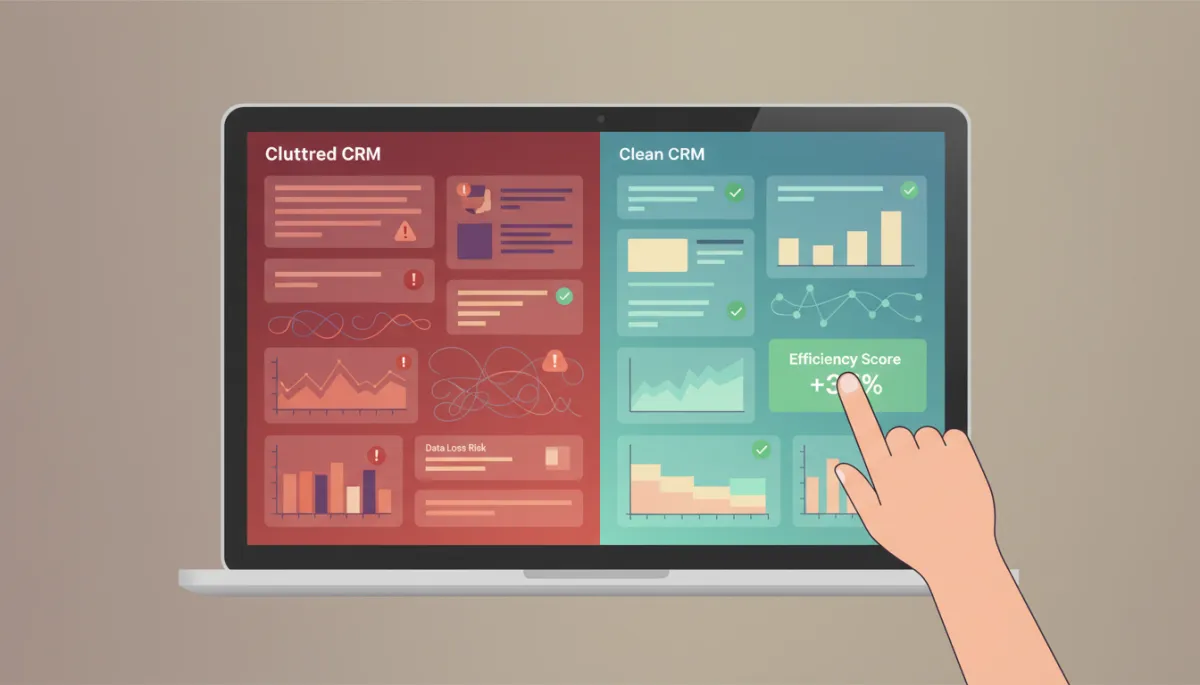
A structured GoHighLevel Health Check turns scattered data into a clear growth roadmap.
The Hidden Cost of an Unhealthy CRM
The most dangerous thing about an unhealthy CRM is that the cost is rarely visible on a single line in your P&L. Instead, it shows up as slower teams, weaker customer experiences, unreliable reporting and missed opportunities. Below is a high-level comparison of healthy vs unhealthy GoHighLevel environments.
Area Healthy GoHighLevel CRM Unhealthy GoHighLevel CRM Productivity Teams work from one system, with clear workflows and minimal manual steps. Constant context-switching, manual exports and “shadow systems” in spreadsheets. Customer Experience Consistent, timely communication across email, SMS, calls and communities. Mixed messages, delayed responses and repeated questions from your team. Reporting Reliable dashboards, clear attribution and confident decision-making. Inconsistent numbers, manual reports and decisions based on gut feel. Scalability New offers, regions and teams plug into a clear architecture and snapshots. Every new initiative feels like a custom build, with compounding complexity. Profitability Higher LTV, lower acquisition cost and leaner operations through automation. Hidden costs in labour, churn and missed upsell or renewal opportunities.
Your 10-Step GoHighLevel Health Check Checklist
Use this practical checklist to run a focused GoHighLevel Health Check across your account. You can complete an initial review in a day and then prioritise deeper optimisation work.
Clarify your business goals. List your top 3–5 outcomes (e.g., more booked calls, higher LTV, faster onboarding). Every CRM change should support these goals.
Audit lead capture and routing. Check every form, funnel and integration. Confirm where each lead goes, who owns it and what happens in the first 24 hours.
Review data quality and structure. Inspect custom fields, tags, smart lists and deduplication. Remove or merge what you no longer use and standardise naming conventions.
Map your core customer journeys. From first touch to sale to renewal or upsell, sketch each journey and compare it to your current GoHighLevel workflows.
Rationalise your workflows. Identify duplicate or legacy automations, retire what is no longer needed and consolidate where possible to reduce complexity.
Optimise your pipelines. Align stages with real sales steps, enforce opportunity creation and closure rules and configure automation to keep data current.
Check performance and load times. Test key pages and workflows. If navigation feels slow, review account structure, heavy assets and unnecessary automations that may add friction.
Evaluate AI and automation usage. List where you use Conversation AI, Voice AI or Ask AI. Confirm they support, not replace, human touchpoints and that you are tracking their results.
Review reporting and dashboards. Ensure leadership has a small set of accurate, easy-to-read dashboards for revenue, pipeline, lead sources and retention.
Create an optimisation roadmap. Prioritise quick wins (e.g., fixing assignment rules) and then schedule deeper projects (e.g., full CRM Optimisation or Business Automation Audit) over the next quarter.
Why Businesses Choose an Implementation Partner
A one-time GoHighLevel setup can get you started, but it rarely keeps pace with real-world growth. As your offers, teams and technology evolve, you need an implementation partner who understands both the platform and your business model – a partner who can own the ongoing CRM Health Check, optimisation and innovation cycle with you.
Workflow optimisation: Turning scattered automations into coherent journeys that reduce manual work and increase conversion.
CRM architecture: Designing pipelines, fields, tags, snapshots and sub-accounts that scale cleanly as you grow.
AI strategy: Using Conversation AI, Voice AI and Workflow AI where they genuinely add value, with clear guardrails and KPIs.
Automation testing: Implementing staging, test scenarios and launch checklists so new automations work the first time, every time.
Reporting and analytics: Building dashboards that leadership actually uses to make decisions, not just “nice to have” charts.
Documentation and training: Creating playbooks, SOPs and training so your team can operate confidently inside GoHighLevel.
📌 Key Takeaway: A strong implementation partner turns GoHighLevel from “another tool” into a strategic asset that compounds value over time.
Local GoHighLevel Experts Across New Zealand
For many founders and agency owners, working with a local GoHighLevel Expert makes all the difference. You want someone who understands your market, your time zone and the realities of operating in New Zealand – not just generic templates. HL Growth Partner supports businesses nationwide with localised GoHighLevel Health Check and implementation services.
If you are growing a service-based business or agency in Auckland and need hands-on help with CRM Optimisation, workflow design and automation, you can tap into a dedicated GoHighLevel expert in Auckland who understands the pace and scale of the city’s digital economy. For Christchurch-based firms balancing local relationships with national reach, a specialised GoHighLevel expert in Christchurch can help you streamline operations and deliver consistent customer experiences across channels. And if you are a Wellington SaaS or consulting business navigating complex sales cycles and government or enterprise clients, partnering with a GoHighLevel expert in Wellington gives you a strategic ally for architecture, compliance and reporting.
Wherever you are in New Zealand, HL Growth Partner provides a consistent methodology for GoHighLevel Optimisation while adapting to your local context, industry and growth stage.
Conclusion: Turn Your GoHighLevel CRM into a Growth Engine
GoHighLevel continues to evolve rapidly, with powerful AI, automation and reporting features rolling out across 2026. But without a deliberate GoHighLevel Health Check, even the best tools can become slow, confusing and underutilised. The warning signs are often subtle at first – a few missed leads here, a slow workflow there – until they add up to real revenue loss and operational drag.
By regularly auditing your CRM architecture, workflows, pipelines, data and AI usage, you can keep GoHighLevel aligned with your business strategy, not your past experiments. A structured CRM Health Check gives you clarity on what is working, what is slowing you down and where to invest next for maximum impact on productivity, customer experience and profitability.
💡 Next Step: Do not wait for a major outage or customer complaint to review your CRM. A proactive health check is far cheaper than a crisis.
HL Growth Partner works with growing SMEs, agencies, SaaS founders, coaches and consultants to deliver end-to-end GoHighLevel Health Checks, implementation and ongoing optimisation. Whether you need a one-off GoHighLevel Audit or a long-term implementation partner to own your CRM Performance, Workflow Optimisation and AI strategy, you do not have to figure it out alone.
If you are ready to turn your GoHighLevel account into a reliable growth engine, book a strategy call with HL Growth Partner today. Together we will review your current setup, run a focused GoHighLevel Health Check and build a clear implementation roadmap so your CRM finally runs at the speed of your ambitions.
Related Articles
Go High Level
- GoHighLevel vs HubSpot: Which CRM Fits Australian Small Business? (2026)
- GoHighLevel vs Keap (Infusionsoft): CRM and Automation for Small Business Compared (2026)
- Why Your Go High Level CRM Isn’t Converting Leads
GHL Funnels & CRM
- GoHighLevel Pipelines & Opportunities: CRM Setup (2026)
- GoHighLevel Tags vs Custom Fields: When to Use Which to Keep Your CRM Clean (2026)
- GoHighLevel Proposals & Estimates: Setup (2026)
